
 Local SEO
Complete Guide to Local Business Citations: What They Are and Why They Matter
Learn what local business citations are, why NAP consistency is critical for SEO, and how to build citations on the most important directories in 2026.
What Are Local Business Citations?
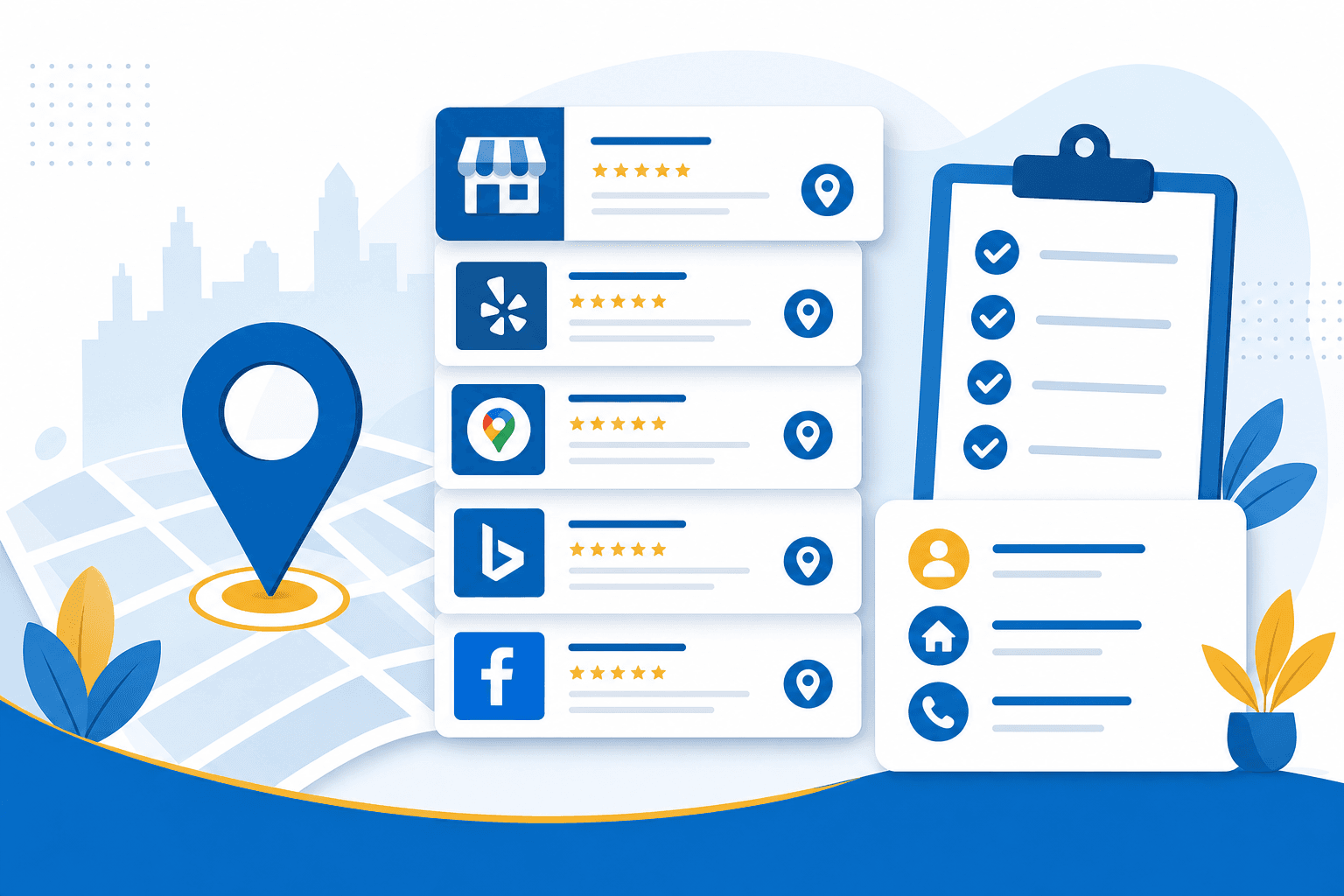
A local business citation is any online mention of your business's Name, Address, and Phone number (NAP). Citations can appear on business directories (Yelp, Yellow Pages), social platforms (Facebook, LinkedIn), industry-specific sites (TripAdvisor for hotels, Avvo for lawyers), and data aggregators that feed information to hundreds of smaller directories.
Citations are one of the core ranking factors for Google's local algorithm. They help Google validate that your business is real, legitimate, and located where you say it is.
Think of citations as votes of confidence: the more consistent, high-quality mentions of your business across the web, the more trust search engines place in your listing.
Types of Citations
Structured Citations
These appear in organized directory listings with dedicated fields for business name, address, phone, website, hours, and categories. Examples include Google Business Profile, Yelp, Bing Places, and Apple Maps.
Unstructured Citations
These are mentions of your NAP in blog posts, news articles, press releases, or social media posts. They do not have a formal listing format but still count as citations.
| Citation Type | Example | SEO Impact |
|---|---|---|
| Structured (directory listing) | Yelp, BBB, Yellow Pages | High — direct NAP validation |
| Unstructured (mention) | Local newspaper article, blog post | Medium — contextual relevance |
| Social (profile page) | Facebook Page, LinkedIn Company | Medium-High — authority signals |
Why NAP Consistency Is Everything
The single biggest mistake businesses make with citations is inconsistency. If your Google listing says "123 Main Street, Suite 4" but Yelp says "123 Main St #4" and Facebook says "123 Main Street," search engines are not sure which is correct. This confusion weakens your local rankings.
Pick one canonical format for your NAP and use it everywhere. Our NAP Formatter generates a clean, standardized version of your business information that you can copy and paste into every directory.
Common Inconsistencies to Watch For
- Street abbreviations: "Street" vs. "St." vs. "St"
- Suite/unit formatting: "Suite 200" vs. "Ste 200" vs. "#200"
- Phone formatting: "(555) 123-4567" vs. "555-123-4567" vs. "5551234567"
- Business name variations: "Joe's Auto Repair" vs. "Joe's Auto Repair LLC" vs. "Joes Auto Repair"
- Old addresses: if you moved, old listings with the previous address still exist
Top Citation Sources to Prioritize
Not all citations carry equal weight. Focus on these high-authority sources first:
Tier 1 — Essential (Do These First)
- Google Business Profile — the single most important listing
- Apple Maps (Apple Business Connect) — important for iPhone users
- Bing Places for Business — feeds data to Cortana, Edge, and Alexa
- Yelp — massive authority for local businesses
- Facebook Business Page — social validation and review platform
Tier 2 — Important Directories
- Better Business Bureau (BBB) — trust signal
- Yellow Pages (YP.com) — longstanding directory
- Foursquare — feeds data to Uber, Twitter, Samsung, and more
- Nextdoor — hyperlocal community recommendations
- Manta — small business directory
Tier 3 — Industry-Specific
- Restaurants: TripAdvisor, OpenTable, Zomato
- Healthcare: Healthgrades, Zocdoc, Vitals
- Legal: Avvo, FindLaw, Justia
- Home Services: Angi, HomeAdvisor, Thumbtack
- Real Estate: Zillow, Realtor.com, Redfin
How to Build Citations: A Step-by-Step Process
- Audit existing citations. Search your business name in quotes on Google. Note every site that mentions your NAP and check for accuracy.
- Fix inconsistencies. Log into each directory where your NAP is wrong and update it to match your canonical format.
- Claim unclaimed listings. Many directories auto-generate listings from data aggregators. Claim yours so you can control the information.
- Build new citations. Work through the tier lists above, starting with Tier 1. Create a profile on each site with your exact canonical NAP.
- Submit to data aggregators. Services like Data Axle, Neustar Localeze, and Foursquare feed information to hundreds of smaller directories. Getting listed on aggregators multiplies your reach.
- Monitor regularly. Check your citations every 3–6 months. Directories can change your data, merge listings, or create duplicates.
Quick Citation Checklist
| Task | Status |
|---|---|
| NAP format standardized | ☐ |
| Google Business Profile claimed & optimized | ☐ |
| Apple Maps listing created | ☐ |
| Bing Places listing created | ☐ |
| Yelp listing claimed | ☐ |
| Facebook Business Page set up | ☐ |
| 5+ Tier 2 directories completed | ☐ |
| Industry-specific directories completed | ☐ |
| Data aggregator submissions done | ☐ |
| Quarterly audit scheduled | ☐ |
Tools to Help You Build Citations
- NAP Formatter — generate a consistent NAP format for all directories
- Local Business Schema Generator — add structured data to your own website
- Google Maps Embed Generator — add a map to your website's contact page
- Business Hours Generator — format hours consistently for directories
Conclusion
Citations are a foundational piece of local SEO. They are not glamorous, but they work. A business with 50 accurate, consistent citations will almost always outrank a competitor with 200 inconsistent, duplicate ones. Focus on quality over quantity, maintain consistency, and audit regularly. Your local rankings will thank you.
Ready to get started? List your business for free on Submit Your Store and begin building your citation network today.
About the Author
Navjeet Kamboj — Founder & Local SEO Editor. Navjeet builds and edits local business guides on Submit Your Store, focusing on helpful, accurate content backed by real data — not paid placements.